





How to Load and Unload Commercial Trucks Safely

Safe truck loading and unloading means preparing the vehicle and area, distributing weight evenly, securing cargo against shifting, and lifting with proper technique and equipment. Done right, it protects your crew and everything on the truck. Done wrong, it's one of the most common sources of workplace injury in the trades.
If you run a plumbing, electrical, HVAC, or general contracting business, your trucks get loaded and unloaded more times in a week than a long-haul rig does in a month. Every job site stop is another chance for a strained back or a ladder sliding off the rack on the freeway. This guide covers the full process for the vehicles trades businesses actually use: cargo vans, box trucks, pickups, and flatbeds.
Why Safe Loading and Unloading Matters
OSHA calls loading and unloading one of the most hazardous operations at any facility, and the risk doesn't disappear when you swap the loading dock for a curb or a job site. Overexertion, repetitive motion, and bodily conditions caused about 946,000 cases involving days away from work, job restriction, or transfer in 2023 and 2024, the leading cause of serious nonfatal workplace injuries, according to the Bureau of Labor Statistics.
The costs stack up fast. A single back injury can sideline a tech for weeks, and workers' comp claims, project delays, and damaged materials all come out of your margin. Unsecured cargo adds another layer: if a pipe or panel comes loose in transit, you're looking at fines and liability, or worse, an injured motorist.
There's a compliance angle too. Federal cargo securement rules under FMCSA apply to commercial vehicles operating on public roads. California adds its own requirements: Vehicle Code Section 23114 requires every load to be constructed, covered, or loaded so nothing can drop, blow, or spill onto the highway, and Section 24002 makes it unlawful to operate a vehicle that is not safely loaded. A load that shifts or spills can put your DOT number and your insurance rates on the line.
Before You Load: Prep the Truck and the Area
Most loading accidents trace back to skipped prep. Ten minutes up front prevents the worst outcomes.
Inspect the Vehicle
Walk around the truck before anything goes in it. Check that:
- The cargo floor is clean, dry, and free of debris that could cause slips or damage freight
- Tie-down points, E-track, and rails are intact and not bent or rusted through
- Liftgate hydraulics cycle smoothly with no leaks or hesitation
- Ramps seat properly and show no cracks along the rails
- Door latches and roll-up doors open and close without binding
If you're picking up a rental, run through this during the walkaround. Hengehold's rental pick-up checklist covers what to verify before you leave the lot.
Know Your Payload and GVWR
Every truck has a Gross Vehicle Weight Rating, the maximum it can weigh fully loaded. Payload is what's left after you subtract the truck's curb weight, your crew, and your fuel. Exceeding it is illegal and wrecks your braking distance, and most insurance policies won't cover an overloaded truck.
A half-ton pickup might carry 1,500 to 2,000 pounds. A typical 16-foot box truck handles 4,000 to 7,000 pounds depending on the chassis. Check the door jamb sticker on your specific vehicle rather than trusting the class name. Copper pipe, cast iron, and rooftop units are heavier than they look.
Set Up the Loading Zone
Park on level ground, set the parking brake, and chock the wheels if you're using a ramp or liftgate. Kill the engine and pocket the keys so the truck can't move while someone is inside the box. Keep the area clear of anyone not actively loading, and skip curbside loading in active traffic lanes whenever you can. If visibility is poor, wait or add lighting. Rushing a load in the dark is how tailgates meet shins.
How to Load a Commercial Truck Step by Step
- Stage your cargo first. Group items by weight and by unload order. Whatever comes off first at the job site goes in last.
- Load the heaviest items first, positioned low and toward the front of the cargo area, over or ahead of the rear axle.
- Distribute weight evenly side to side. A lopsided load pulls the truck during braking and cornering.
- Keep roughly 60 percent of cargo weight in the front half of the box. Too much weight behind the rear axle lightens the steering and gets dangerous at highway speed.
- Use mechanical help for anything over about 50 pounds, or grab a second set of hands. Dollies, hand trucks, and pallet jacks exist so your spine doesn't have to do the work.
- Lift with your legs, not your waist. Elbows close to the body, spine neutral, and pivot with your feet instead of twisting your torso.
- Wear the right PPE. Gloves, steel-toed boots, and high-visibility gear if you're loading near traffic.
- Fill gaps as you go. Empty space is where cargo builds momentum before it hits something.
Securing Cargo the Right Way
Loose cargo causes damage in transit and injuries at unload, when a shifted load comes down on whoever opens the door. Securement is not optional, and for commercial vehicles it's regulated.
FMCSA's cargo securement rules (49 CFR 393.106) require tie-downs with an aggregate working load limit of at least half the weight of the cargo being secured. The math has a wrinkle: a tie-down only counts its full working load limit when it runs from an anchor on one side of the vehicle, over or around the cargo, to an anchor on the other side. A tie-down attached directly to the cargo, or anchored on the same side it started, counts at only half its rated limit. The working load limit (WLL) is printed on the strap or chain label, and when the math gets close, add another tie-down.
Match the method to the cargo:
- Ratchet straps for boxed goods, equipment, and appliances. Tension them snug and check them after the first few miles.
- Load bars to wall off sections of a box truck or van so freight can't slide rearward.
- E-track systems for flexible anchor points along van and box walls. If your truck doesn't have them, track systems are a common upfit for trades vehicles.
- Chains and binders for heavy equipment on flatbeds. Leave slight slack per the manufacturer's guidance.
- Bulkheads or cargo nets to keep anything from entering the cab area under hard braking.
Ladders, conduit, and pipe on exterior racks need dedicated tie-downs at multiple points. A ladder held by one bungee is a projectile with a delay timer.
How to Unload Safely
Unloading concentrates risk in the first thirty seconds. Cargo may have shifted, and the crew is often working at a curb or job site instead of a controlled dock.
Open doors slowly and stand to the side, never directly in the swing path. Scan the load before pulling anything. If items shifted, restack from a stable position instead of tugging at the bottom of a pile.
On a liftgate, one person and the cargo, nobody else. Keep feet clear of the platform edges, and never ride the gate as a shortcut. On ramps, walk cargo down under control with a dolly brake or a spotter, and maintain three points of contact any time you're climbing in or out of the box. Jumping down from the deck is the classic sprained-ankle move, and it gets more expensive with every year on your knees.
Reverse the loading order, stage items clear of the work zone as they come off, and keep the path between truck and drop point free of cords, hoses, and debris.
Equipment That Makes Loading and Unloading Easier
| Equipment | Best for | Typical use |
|---|---|---|
| Hand truck / dolly | Boxes, water heaters, small equipment | Everyday moves under 500 lbs |
| Appliance dolly with straps | Tall, heavy units | Furnaces, tankless heaters, panels |
| Loading ramp | Pickups and box trucks without liftgates | Rolling equipment, carts |
| Liftgate | Heavy or palletized cargo | Rooftop units, pallets of material |
| Pallet jack | Palletized freight | Warehouse and supplier pickups |
| Moving blankets and straps | Finish materials, fixtures | Protecting cabinets, glass, trim |
You don't need to own all of it. Dollies, ramps, and lifts are available as rental add-ons, and straps, tie-downs, and blankets are stocked as moving supplies if you're renting for a one-off job.
Loading Tips by Vehicle Type
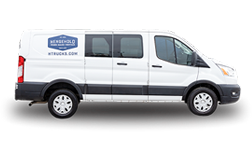
Cargo Vans
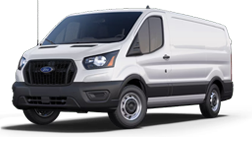
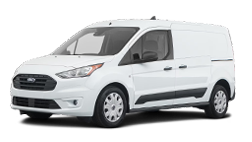
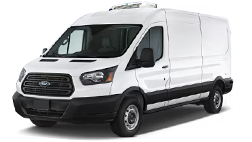
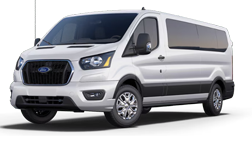
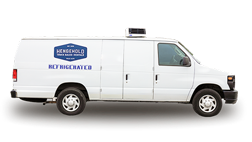
Shelving changes everything in a cargo van. Weight stays low and distributed, small parts stop rolling around, and unloading at the job site becomes grab-and-go. Keep heavy stock in lower bins and secure anything loose on the floor before driving. A bulkhead between the cargo area and cab is the single best safety upgrade for a van that hauls daily.
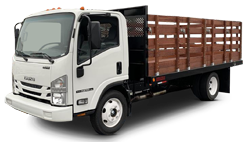
Box Trucks
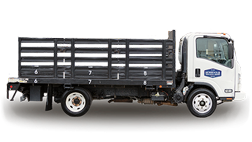
The box gives you volume, and volume invites overloading. Watch payload closely on a box truck, since it's easy to hit the weight limit long before the box looks full. Use the full wall height with E-track and load bars, and load in tiers with heavy items on the bottom layer only.
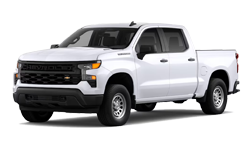
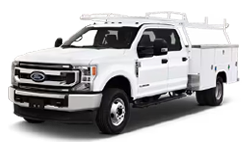
Pickups and Flatbeds
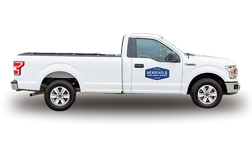
Open beds mean every item needs its own securement. Keep cargo below the bed rails when possible, and anything above rail height gets strapped at multiple points. Tailgates are load-rated lower than the bed floor, so don't let heavy cargo ride on them. Flag any overhang per state rules, and remember that crosswinds work on tall loads like a sail.
A Note for School Districts and Facilities Teams
Maintenance crews moving equipment between campuses face the same rules as any trade, with the added factor of untrained volunteer help. Keep loading to trained staff, and standardize the same walk-through and securement checklist across every site.
FAQs
Does OSHA or the DOT regulate loading and unloading?
OSHA regulates loading and unloading off the highway, and FMCSA regulates cargo securement on public roads, so a trades business typically answers to both. OSHA's authority covers warehouses, plants, and job sites. FMCSA, under the DOT, takes over the moment the loaded vehicle is operating on a public road.
Do I need a CDL to load and drive a box truck?
Most commercial vehicles do not require a CDL because trucks with a GVWR under 26,001 pounds fall below the federal and California licensing threshold. That covers nearly all cargo vans and light box trucks. Two exceptions matter for California trades crews: towing a trailer with a GVWR of 10,001 pounds or more requires a commercial license, and California classifies any 3-axle vehicle weighing over 6,000 pounds as a Class B vehicle. The weight rules still apply either way.
How often should tie-downs be replaced?
Inspect tie-down straps before every use and retire any with cuts, fraying, burns, or unreadable working load limit labels. There is no fixed replacement schedule; condition is the standard. A damaged strap can fail at a fraction of its rated limit.
Is it faster to skip securement on short hops between job sites?
No trip is short enough to skip cargo securement, because most cargo shifts happen in the first hard stop. Securement rules also apply the moment the truck is on a public road, regardless of trip length.
Load Smart, Work Longer
Safe loading and unloading is a habit, and habits are built on trucks that are set up for the work. Hengehold Trucks has been outfitting Bay Area trades businesses since 1948 with work-ready vans and trucks, rental equipment for the jobs your fleet can't cover, and upfits that make every load faster and safer. Stop by the Palo Alto lot or give the team a call to find the right truck for the way you work.